

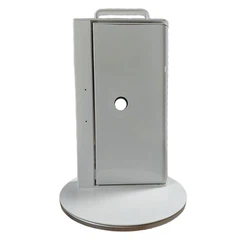
Auxiliary facilities for display cases
Mar 12, 2026
Leave a message
The equipment used in exhibitions refers to the machinery used to place, enclose, support, hang, and display exhibits, such as display stands, display platforms, and display cabinets. The principles of modern display prop design and selection are: First, prioritize standardized and serialized models, supplemented by special designs; second, prioritize modular and disassembly-based models to facilitate arbitrary combination and variation, and convenient packaging, transportation, and storage; third, ensure the structure is sturdy and durable, easy to process, and safe and reliable; fourth, maintain simple shapes and pure colors.
The design or selection of the shape, color scheme, specifications, and dimensions of display props depends on factors such as the style and scale of the exhibition environment, the nature of the display, the characteristics of the exhibits, and the color scheme of the exhibition space. With the popularization of modern exhibitions, more and more manufacturers are developing, designing, and producing novel display cabinets suitable for various exhibition formats. Professionally manufactured standardized products are gradually replacing traditional display props. Therefore, when manufacturing display cabinets, one should first consider using serialized props with multiple functions and uses, minimizing or avoiding the use of specially designed props of special specifications, to facilitate exhibition setup and save costs.
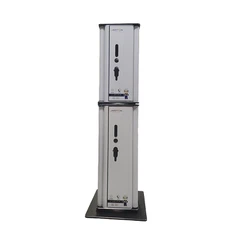
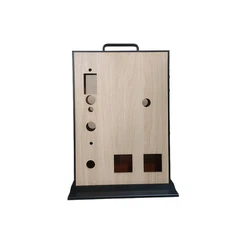
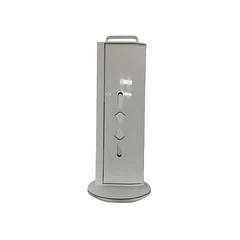
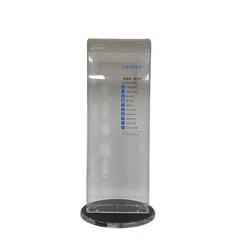
Display cases are used to protect and highlight important items. Common types of display cases include wall-mounted cabinets (placed against a wall), center cabinets (centered cabinets with glass on all four sides), and table cabinets (desk-style flat cabinets with horizontal or sloping glass covers), as well as display cases. Most commonly used in homes are assembled tall cabinets and center cabinets with grooves on the vertical and horizontal components to insert glass; some use spring steel clips to hold the glass in place. If placed against a wall, only the back panel can be installed on one side, without glass. Some tall cabinets can also accommodate light bulbs on top. Table cabinets typically come in two types: flat and sloping. Sloping cabinets can be single-sloped or double-sloped: single-sloped cabinets are usually placed against a wall, while double-sloped cabinets are placed in the center of the exhibition hall. The typical heights of table cabinets are: flat cabinets are 105-120 cm high; sloping cabinets are approximately 140 cm high; cabinet length is 120-140 cm; depth is 70-90 cm; and the internal clear height is 20-40 cm. A display case, designed for viewing from only one direction, resembles a cabinet or niche-style display case. Various scenes can be set up inside to present exhibits in a "realistic" environment, making the display more vivid. Display cases are generally 180-150 cm high or higher; 90-150 cm deep or more; and the length can be determined according to actual needs. The back and top sides of the display case should be designed with curves to create a sense of depth. To ensure the realism of the scene, the depth of a large display case should be at least half its width, and the lighting design should also be emphasized to highlight the exhibits.
Send Inquiry