


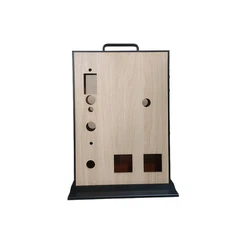



Display Rack Manufacturing Process
Apr 19, 2026
Leave a message
Material Selection and Design Finalization
Making display racks is like building with blocks; choosing the right materials is the first step to success. Common materials like metal, acrylic, and wood each have their own characteristics: metal has strong load-bearing capacity and is suitable for large display racks; acrylic has excellent transparency and is suitable for displaying premium items; and natural wood has a warm and smooth texture. Designers will create 3D drawings based on the display requirements, precisely calculating the load-bearing ratio of each connection point to ensure structural stability.
Precision Machining and Assembly
Once in the workshop, the materials begin their transformation: metal tubes undergo laser cutting and bending, acrylic sheets are CNC-carved with precise grooves, and wood undergoes anti-cracking treatment. The assembly stage is the most demanding in terms of craftsmanship. For example, invisible magnetic closures are used instead of traditional screws to fix acrylic shelves, which is both aesthetically pleasing and prevents scratches on exhibits. All corners are rounded to balance safety and visual smoothness.
Surface Treatment and Functional Testing
The final stage determines the appearance and lifespan of the display rack. Metal frames undergo three layers of protection: degreasing, phosphating, and electrostatic spraying; wooden products are coated with environmentally friendly wood wax oil. We will conduct a 72-hour load test simulating real-world usage scenarios to check if the shelf deformation is within a reasonable range. For height-adjustable display racks, we will also repeatedly test the smoothness of the lifting mechanism to ensure customers can easily operate it with one hand.
Send Inquiry