

Material selection for display racks
Mar 19, 2026
Leave a message
Materials are the foundation of display racks, and their selection should primarily consider the synergy between structural strength and visual appeal, rather than judging the merits of a particular material in isolation.
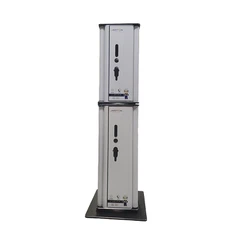
The application logic of metal materials: Metals, especially steel and aluminum alloys, have high yield strength and ductility as their core value. Steel, through cold rolling, bending, and welding, forms an irreplaceable load-bearing foundation. Surface treatments, such as electrostatic powder coating, not only provide corrosion resistance but, more importantly, adjust the visual "weight" and sense of temperature of the metal through color and texture (such as matte or sandblasted finishes). Aluminum alloys, due to their lower density and good anodizing properties, are often used for components requiring weight reduction or those seeking a specific metallic sheen. The selection of material thickness (such as commonly 0.8mm to 2.0mm cold-rolled steel plates) is directly calculated based on the expected load and structural span, avoiding deformation due to insufficient thickness or waste due to excessive thickness.
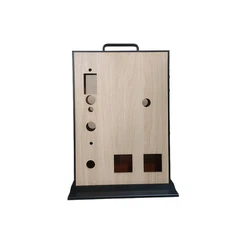
The interface role of wood materials: Wood components, such as MDF, solid wood, or engineered wood veneer, primarily serve as a visual interface and provide localized load-bearing capacity. Medium-density fiberboard (MDF) has become the mainstream choice for manufacturing back panels and shelves with specific shapes due to its uniform internal structure, ease of precision cutting, and surface coating (PVC, acrylic, real wood veneer). Its physical properties are primarily concerned with bending strength, moisture resistance, and the impact of edge banding processes on durability. Solid wood is more often used in scenarios requiring natural textures or a specific high-end feel, but its anisotropy and the resulting deformation risk need to be mitigated through scientific drying processes and structural design.
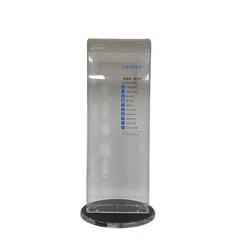
The light transmission and shaping properties of polymer materials: Materials such as acrylic (PMMA) and polycarbonate (PC) have their core value in light transmission, weather resistance, and thermoforming capabilities. Acrylic boasts excellent light transmittance and surface gloss, making it suitable for lightbox panels and product brackets; its thickness and size must be matched to prevent warping. Polycarbonate offers stronger impact resistance, making it suitable for environments with potential collision risks. The processing of these materials relies on CNC cutting, hot bending, and engraving processes, and their diverse designs fully consider the material's shrinkage rate and stress concentration points.
Visual Transparency and Safety Standards of Glass Materials: When using tempered glass for display racks, the primary concerns are safety and support methods. Diverse approaches utilize fully tempered glass to ensure safety in case of breakage. Installation relies entirely on specialized hardware connectors or robust locking mechanisms, and the design must allow for physical clearance to accommodate glass expansion. The glass thickness (typically 5mm-12mm) and the distance between support points must strictly correspond to ensure a safe operating range under pressure.
Send Inquiry