

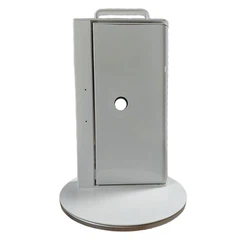
What Display Angles Are Available For Acrylic Display Stands?
Apr 13, 2026
Leave a message
Horizontal Angles:
Frontal Horizontal Display: This is the most common display angle; it positions the exhibit facing directly toward the viewer, allowing for a complete presentation of its overall appearance. It is ideal for showcasing two-dimensional items-such as paintings or photographs-enabling viewers to clearly discern the exhibit's details and content.
Lateral Horizontal Display: Presenting an exhibit from the side highlights its lateral features, thickness, or unique side profile. This approach is particularly effective for items possessing significant depth or featuring distinct textures or shapes on their sides; for instance, a lateral view of a three-dimensional sculpture can effectively reveal its lines and structural layers.
Inclined Angles:
Upward-Tilting Display: By tilting the display stand upward at a specific angle, the viewer's gaze is naturally drawn upward. This method is suitable for exhibits where upper details or top-surface designs need to be emphasized-such as handicrafts featuring intricate upper ornamentation-allowing viewers to observe these uppermost elements with greater clarity.
Downward-Tilting Display: A downward-tilting angle allows viewers to more intuitively observe the upper portions of an exhibit. This is particularly appropriate for items where important markings or information are located on the top surface-such as the display of small products featuring a prominent brand logo on their upper side.
Vertical Angles:
90-Degree Vertical Display: Positioning an exhibit vertically creates a dignified and stable visual effect. This method is frequently employed for items that convey authority or require their height to be highlighted-such as trophies or certificates-thereby emphasizing their unique status.
Adjustable Multi-Angle Vertical Display: Through specialized structural design, the display stand allows for multi-angle adjustments along the vertical axis. This enables flexible adaptation of the display angle based on the exhibit's specific characteristics and presentation requirements, thereby accommodating the varying viewing perspectives of different audiences.
Combined Angles:
Multi-Faceted Combined Display: By utilizing the various surfaces of an acrylic display stand, a multi-faceted combined presentation can be achieved, offering a comprehensive, 360-degree view of the exhibit. This allows viewers to gather information about the item from multiple angles and is well-suited for exhibits with complex shapes or those requiring a complete visual overview-such as large-scale mechanical models.
Layered Multi-Angle Display: This method involves arranging exhibits in layers across display stands of varying heights, each set at a distinct angle. This approach enhances the visual depth and richness of the presentation, encouraging viewers to observe the exhibits from different positions and perspectives. It is commonly utilized for showcasing series of related items or in scenarios requiring diverse display configurations.
Send Inquiry